Pancha Karmendriyas: The Five Organs of Action and Conscious Living
6/10/20266 min read

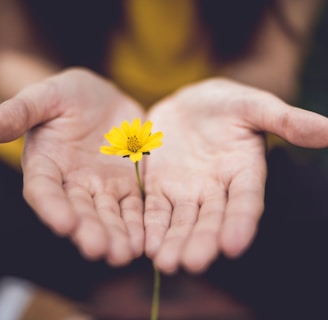
In yogic philosophy, human life is shaped by both perception and action.
Through the Jnanendriyas, the five sense organs, we receive the world. We hear, touch, see, taste, and smell. Through the Karmendriyas, the five organs of action, we respond to the world. We speak, hold, move, release, and create.
The word pancha means five. Karma means action. Indriya means faculty or organ. The Pancha Karmendriyas are the five faculties through which intention becomes action.
They are:
Vak: speech
Pani: hands
Pada: feet
Payu: organ of elimination
Upastha: organ of reproduction or creation
These are not only physical body parts. They are expressions of consciousness. They show how inner energy moves outward into the world.
For healing, the Karmendriyas are important because action reveals inner alignment. What we say, what we touch, where we go, what we release, and what we create all reflect the state of the body, mind, and prana.
When action is unconscious, it can repeat old patterns. When action is guided by awareness, it becomes yoga.
From Perception to Action
The Jnanendriyas receive impressions. The Karmendriyas express responses.
We hear something, and then we speak.
We see something, and then we reach.
We feel something, and then we move.
We digest life, and then we release.
We experience desire, and then we create or connect.
Between perception and action, there is a sacred space.
In that space, we can either react from habit or respond from awareness.
This is one of the deepest parts of healing. Many of our actions are shaped by old conditioning. We say yes when we mean no. We move toward what harms us. We hold what needs to be released. We create from fear instead of love. We use speech to defend instead of connect.
The Karmendriyas invite us to bring consciousness into the way we act.
1. Vak: Speech
Vak is the faculty of speech. Through speech, inner thought becomes outer vibration. Words can heal, harm, clarify, conceal, connect, or divide.
In yogic philosophy, speech is sacred because sound carries energy. What we say affects not only others, but also our own mind and nervous system.
Speech can be aligned with truth, compassion, and wisdom. Or it can be shaped by fear, anger, gossip, defensiveness, manipulation, or unconscious habit.
In healing work, Vak asks:
Are my words aligned with truth and kindness?
This does not mean speaking only pleasant words. Sometimes healing requires difficult truth. But yogic speech asks us to bring awareness to timing, tone, intention, and impact.
Before speaking, we can ask:
Is it true?
Is it necessary?
Is it kind?
Is it the right time?
Am I speaking from reaction or clarity?
Practices that support conscious speech include mantra, chanting, silence, journaling before difficult conversations, pausing before responding, and practicing Satya with Ahimsa: truth with non-harming.
Vak teaches that speech is energy made audible.
2. Pani: Hands
Pani refers to the hands, the faculty of grasping, holding, giving, receiving, creating, and touching.
The hands reveal our relationship with the world.
We use them to work, cook, write, clean, build, comfort, pray, offer, protect, and create. They can hold tightly or gently. They can give freely or grasp from fear. They can heal through touch or harm through force.
In healing work, Pani asks:
How do I hold, give, receive, and create?
Many people are more comfortable giving than receiving. Some hold on too tightly. Some struggle to reach for support. Some use constant doing as a way to avoid feeling.
The hands can become a place of mindfulness.
When washing dishes, touching the earth, preparing food, offering care, writing, or placing a hand on the heart, we can return to presence.
Practices that support conscious hands include mudras, self-massage, mindful touch, creative work, prayer hands, giving with awareness, receiving without guilt, and noticing when the hands grip from tension.
Pani teaches that action can become offering.
3. Pada: Feet
Pada refers to the feet, the faculty of movement and locomotion. Through the feet, we move through the world. We choose direction. We approach, leave, stand, wander, return, and ground.
The feet connect us to the earth.
In healing work, Pada asks:
Where am I going, and what am I standing on?
This question is both physical and symbolic.
Are we moving toward what nourishes us?
Are we walking away from what harms us?
Are we standing in our truth?
Are we grounded before we act?
Are we rushing through life without feeling our steps?
The feet are closely connected to grounding and Apana Vayu, the downward-moving energy. When we are anxious or scattered, feeling the feet can bring awareness back into the body.
Practices that support conscious feet include walking meditation, standing postures, grounding through the soles, slow mindful steps, barefoot walking on natural ground, and pausing before making big decisions.
Pada teaches that every step is a choice.
4. Payu: Elimination and Release
Payu is the faculty of elimination. It governs the body’s ability to release waste and complete cycles.
Although this may seem less poetic than speech or hands, it is deeply important in yogic healing. Release is essential to life. The body must let go of what it no longer needs. So must the mind and heart.
Payu is connected to Apana Vayu, the downward-moving energy of elimination, grounding, menstruation, birth, and release.
In healing work, Payu asks:
What am I holding that is ready to be released?
This may include physical waste, but also old emotions, resentment, shame, outdated identities, clutter, obligations, habits, or beliefs.
When release is blocked, we may feel heavy, stagnant, tense, or emotionally congested. When release flows, there is relief, clarity, and space.
Practices that support Payu include grounding routines, proper hydration, fiber-rich nourishment, squatting postures, forward folds, long exhalations, journaling release, decluttering, and rituals of letting go.
Payu teaches that healing requires completion.
We cannot keep taking in life without releasing what has already served its purpose.
5. Upastha: Reproduction, Pleasure, and Creation
Upastha is the faculty connected to reproduction, sexuality, pleasure, creativity, and generative energy.
This is one of the most sensitive and powerful Karmendriyas because it relates to life-force itself. It is not only about physical reproduction. It is about how creative energy moves through us.
In healing work, Upastha asks:
How do I relate to desire, pleasure, intimacy, and creation?
For many people, this area carries shame, confusion, suppression, longing, trauma, or unconscious patterns. Yogic healing invites us to bring awareness, respect, and sacredness to this energy.
Creative and sexual energy can be scattered, suppressed, compulsive, or consciously directed. When honored, it becomes a source of vitality, connection, art, devotion, and life.
This connects to Brahmacharya, the wise use of energy. Brahmacharya does not necessarily mean rejection of sexuality. In a broader healing context, it means relating to creative life-force with consciousness.
Practices that support Upastha include pelvic awareness, sacral chakra meditation, creative expression, healthy boundaries, honest reflection on desire, respectful intimacy, and learning to experience pleasure without shame or grasping.
Upastha teaches that creation is sacred.
How the Karmendriyas Support Healing
The Karmendriyas show us that healing is not only internal. It must eventually become embodied action.
Vak helps us speak consciously.
Pani helps us give, receive, and create.
Pada helps us move with awareness.
Payu helps us release and complete.
Upastha helps us honor creative life-force.
Together, they ask:
Are my actions aligned with my awareness?
Does my speech reflect truth?
Do my hands express care?
Do my feet walk toward alignment?
Can I release what is complete?
Can I create from sacred energy?
These questions bring yoga into ordinary life.
The Karmendriyas and Karma
Because the Karmendriyas are organs of action, they are directly connected to karma. Karma means action, and every action creates an impression.
Words leave impressions.
Touch leaves impressions.
Movement leaves impressions.
Release leaves impressions.
Creation leaves impressions.
When action is unconscious, it strengthens samskaras, the old patterns of the mind. When action is conscious, it can help dissolve those patterns.
This is why small actions matter.
One honest sentence can shift a relationship.
One grounded step can interrupt anxiety.
One act of release can open space.
One creative choice can restore vitality.
One pause before reacting can change a pattern.
The path of yoga is built through repeated conscious action.
A Gentle Practice With the Five Karmendriyas
Take a quiet moment and reflect on your day.
Move through each faculty of action:
Vak: What words did I speak today? Were they aligned with truth and kindness?
Pani: How did I use my hands? Did I give, receive, hold, or create with awareness?
Pada: Where did my feet take me? Did I move toward alignment?
Payu: What did I release today, physically, emotionally, or energetically?
Upastha: How did I honor my creative or life-force energy?
Let this reflection be gentle.
The purpose is not self-judgment. It is awareness.
Closing Reflection
The Pancha Karmendriyas remind us that action is sacred.
Yoga is not only what happens in meditation or stillness. It is also how we speak, touch, move, release, and create.
Every word can become practice.
Every gesture can become offering.
Every step can become intention.
Every release can become freedom.
Every act of creation can become devotion.
When awareness guides action, life itself becomes yoga.
Connect
Reach out to begin your healing journey.
hello@lacasavita.in
© 2026. All rights reserved.