Pancha Mahabhutas: The Five Elements and the Healing Body
6/9/20266 min read

This continues the Panch series beautifully: first suffering, then layers of being, then life force, now the elemental foundation of the body and nature.
Pancha Mahabhutas: The Five Elements and the Healing Body
In yogic and Ayurvedic philosophy, the human body is not separate from nature. The same forces that shape the earth, rivers, sun, wind, and sky also move within us.
This understanding is expressed through the Pancha Mahabhutas, the five great elements.
The word pancha means five. Maha means great. Bhuta means element or that which has become. Together, the Pancha Mahabhutas describe the five elemental principles that form the foundation of the physical body, the senses, the mind, and the world around us.
These five elements are:
Prithvi: Earth
Apas: Water
Agni: Fire
Vayu: Air
Akasha: Ether or space
These elements are not only physical substances. They are qualities of experience. Earth gives structure. Water gives flow. Fire gives transformation. Air gives movement. Ether gives space.
When the elements are balanced within us, we may feel grounded, fluid, clear, alive, and spacious. When they are disturbed, we may feel heavy, scattered, inflamed, stuck, dry, overwhelmed, or disconnected.
The Pancha Mahabhutas offer a beautiful healing map because they remind us that balance is not abstract. It can be felt in the body.
1. Prithvi: The Earth Element
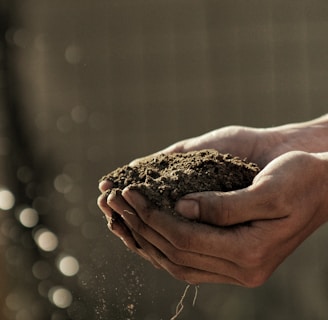
The earth element represents structure, stability, density, patience, and support. In the body, earth is connected to bones, muscles, tissues, skin, nails, teeth, and the physical form itself.
Earth is what gives us a sense of being held.
When the earth element is balanced, we feel grounded, steady, reliable, nourished, and present. We can stay with life without being easily thrown off center. There is patience, endurance, and a sense of belonging in the body.
When earth is imbalanced, it may show up in two ways. Too little earth can feel like instability, anxiety, spaciness, insecurity, or difficulty committing. Too much earth can feel like heaviness, stagnation, lethargy, resistance to change, or emotional dullness.
In healing work, earth asks:
Do I feel supported enough to be here?
Practices that strengthen earth include grounding yoga postures, walking slowly, spending time in nature, eating warm nourishing food, keeping steady routines, resting, touching the earth, and creating a sense of safety in the body.
Earth teaches us that healing needs a foundation.
We cannot always think our way into peace. Sometimes we must return to the ground beneath our feet, the rhythm of our breath, and the simple truth that the body needs care.
2. Apas: The Water Element
The water element represents flow, emotion, softness, adaptability, nourishment, and connection. In the body, water is present in blood, lymph, saliva, tears, plasma, reproductive fluids, and cellular fluids.
Water is what allows life to move.
When the water element is balanced, we feel emotionally connected, adaptable, compassionate, creative, and able to soften. We can feel without being flooded. We can connect without losing ourselves. We can move with change.
When water is imbalanced, too little water may feel like dryness, rigidity, emotional numbness, isolation, or difficulty receiving care. Too much water may feel like emotional overwhelm, attachment, dependency, heaviness, or lack of boundaries.
In healing work, water asks:
Can I allow emotion to move without being consumed by it?
Practices that support water include gentle flowing movement, hip-opening postures, hydration, rest near water, emotional expression, crying when needed, creative practice, and softening the belly and pelvis.
Water teaches us that healing is not always linear. Sometimes it moves like a tide. It rises, falls, returns, releases, and renews.
To heal with water is to remember that softness is not weakness. It is the ability to remain alive and responsive.
3. Agni: The Fire Element
The fire element represents transformation, digestion, clarity, passion, courage, and radiance. In the body, fire is connected to metabolism, digestion, body temperature, vision, cellular transformation, and the inner fire that helps us process life.
Fire is what allows us to transform one thing into another.
Food becomes energy. Experience becomes wisdom. Confusion becomes clarity. Pain becomes insight.
When fire is balanced, we feel motivated, clear, warm, focused, confident, and alive. There is healthy discipline, strong digestion, and the courage to act.
When fire is imbalanced, too little fire may feel like low motivation, poor digestion, dullness, confusion, or lack of confidence. Too much fire may show up as anger, inflammation, impatience, criticism, burnout, or intensity.
In healing work, fire asks:
What needs to be transformed, and can I transform it without burning myself out?
Practices that support balanced fire include breath-centered movement, core practices, twists, mindful discipline, warm foods, sunlight, focused intention, and honest self-inquiry.
Fire teaches discernment. It helps us see what is true, what is excess, what must be released, and what must be strengthened.
But fire must be tended wisely. Too little fire leaves us stagnant. Too much fire consumes us.
Healing requires a steady flame, not a wildfire.
4. Vayu: The Air Element
The air element represents movement, breath, circulation, communication, thought, and change. In the body, air is connected to breathing, nerve impulses, circulation, movement of the limbs, and the flow of prana.
Air is what keeps life moving.
When air is balanced, we feel light, creative, open, inspired, and mentally flexible. The breath moves with ease. The body feels responsive. The mind can shift perspective.
When air is imbalanced, too much air may feel like anxiety, restlessness, racing thoughts, insomnia, dryness, scattered energy, or difficulty grounding. Too little air may feel like stagnation, dullness, restricted breathing, or lack of movement.
In healing work, air asks:
Is my movement connected to steadiness?
Practices that balance air include slow breathing, grounding movement, longer exhalations, gentle walking, alternate nostril breathing, warm oil massage, reducing overstimulation, and creating rhythm in daily life.
Air is closely connected to the mind. When air is disturbed, mental chatter often increases. The thoughts move quickly, the breath becomes irregular, and the body may feel unsettled.
To heal air, we do not need to force the mind into silence. We can begin with the breath.
When the breath steadies, the mind often follows.
5. Akasha: The Ether Element
The ether element represents space, openness, subtlety, sound, consciousness, and possibility. It is the most subtle of the five elements. In the body, ether is connected to the spaces within us: the mouth, throat, nostrils, chest cavity, abdomen, cells, and the inner space of awareness.
Ether is what allows everything else to exist.
Without space, there can be no movement. No breath. No sound. No growth. No transformation.
When ether is balanced, we feel spacious, peaceful, intuitive, receptive, and connected to something larger than the personal self. There is room to listen, room to pause, room to simply be.
When ether is imbalanced, too much space may feel like dissociation, emptiness, isolation, lack of grounding, or feeling disconnected from the body. Too little space may feel like claustrophobia, overwhelm, rigidity, or being crowded by thoughts, responsibilities, and emotions.
In healing work, ether asks:
Can I create space for what is true to emerge?
Practices that support ether include meditation, silence, mantra, chanting, mindful listening, spacious breathing, gentle fasting from noise or screens, prayer, and time under open sky.
Ether teaches us that healing needs space.
Not every wound can be rushed. Not every answer comes through effort. Sometimes we need enough inner quiet for wisdom to rise on its own.
How the Elements Work Together
The five elements are constantly interacting within us.
Earth gives form.
Water gives flow.
Fire gives transformation.
Air gives movement.
Ether gives space.
A balanced life needs all five.
Without earth, we feel ungrounded.
Without water, we become rigid.
Without fire, we lack transformation.
Without air, we become stagnant.
Without ether, we lose spaciousness and connection.
But too much of any element can also create imbalance.
Too much earth can become heaviness.
Too much water can become emotional flooding.
Too much fire can become burnout.
Too much air can become anxiety.
Too much ether can become disconnection.
The healing path is not about rejecting any element. It is about learning which element needs support, which needs softening, and which needs integration.
The Pancha Mahabhutas as a Healing Map
The five elements help us understand ourselves through qualities rather than judgment.
Instead of saying, “I am anxious,” we might notice, “There is too much air and not enough earth.”
Instead of saying, “I am stuck,” we might notice, “Earth is heavy, and fire needs support.”
Instead of saying, “I am overwhelmed,” we might notice, “Water is overflowing, and I need containment.”
This way of seeing is compassionate. It gives us language for imbalance without making it our identity.
The elements also help us choose healing practices more intuitively.
If you feel scattered, invite earth.
If you feel rigid, invite water.
If you feel dull, invite fire.
If you feel stuck, invite air.
If you feel crowded inside, invite ether.
The body often knows what it needs. The elements help us listen.
A Gentle Practice for Exploring the Five Elements
Find a quiet place to sit. Let your breath settle.
Move slowly through each element:
Earth: Feel the weight of your body. Notice where you are supported. Ask, “What helps me feel grounded?”
Water: Notice the flow of breath, emotion, or sensation. Ask, “What wants to move through me?”
Fire: Bring awareness to the navel or heart. Ask, “What is ready to transform?”
Air: Feel the movement of the breath. Ask, “Where do I need more ease or movement?”
Ether: Notice the space around and within you. Ask, “Can I make room for what is true?”
You do not need to force an answer. Let each element speak through sensation, image, memory, or feeling.
Closing Reflection
The Pancha Mahabhutas remind us that we are nature.
We are not separate from the earth beneath us, the water that nourishes us, the fire that transforms us, the air that moves through us, or the space that holds us.
Healing begins when we remember this relationship.
The body is earth.
The emotions are water.
The will is fire.
The breath is air.
The awareness is space.
To work with the elements is to return to balance through the wisdom of life itself.
When we listen to the elements within us, we begin to understand what the body has been saying all along.
Connect
Reach out to begin your healing journey.
hello@lacasavita.in
© 2026. All rights reserved.